

Damp on an internal wall can start inside the cavity. Cavity wall insulation removal in Hampshire may help when wet or poorly installed insulation is transferring moisture to the inner wall. Extraction from a typical three-bedroom detached house takes around two days. A cavity survey helps establish whether insulation or debris is contributing to the problem.
It’s frustrating to find damp patches, mould or cold spots when the cause isn’t obvious. This guide explains how a cavity inspection works, what extraction and debris clearance involve, and what can affect the time needed. It also covers why wet insulation may fail, what happens after removal, and how to judge whether extraction is the right step for your home.
Key Takeaways
- A cavity survey can help establish whether wet or poorly installed insulation is linked to damp, mould or cold spots.
- Extraction involves more than removing insulation: the cavity also needs assessment and debris clearance.
- Look for signs such as new damp patches, unexplained mould or cold areas when deciding whether to investigate the cavity.
- The condition of the insulation, access to the cavity and the amount of debris all affect the work involved.
- Learn what to expect from a specialist removal service and when cavity insulation may need to be replaced.
Cavity wall insulation extraction
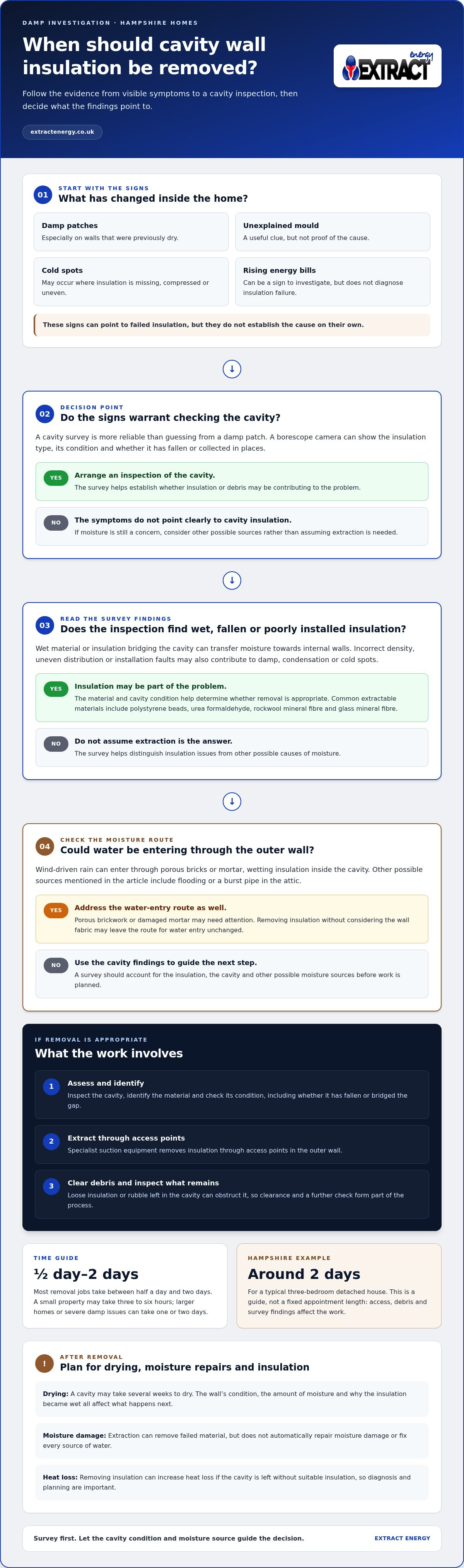
Extraction should start with an inspection, not a guess based on a damp patch. A survey checks the cavity and insulation’s condition, then helps determine whether removal is appropriate.
Extractable insulation materials
Common materials that can be extracted include polystyrene beads, loose or bonded urea formaldehyde, rockwool mineral fibre and glass mineral fibre. Urea formaldehyde insulation was used extensively in homes in the 1970s. The material matters because different products sit and move differently within a wall cavity.
A borescope camera can show what is inside the cavity before work begins. The inspection helps identify the insulation type and whether it has fallen or collected in places. It gives the surveyor a clearer basis for planning extraction, rather than treating every cavity as if it contains the same material.
Reasons for insulation extraction
Removal may be appropriate when insulation is wet, poorly installed or causing problems within the wall. Incorrect density can leave a home insufficiently insulated and contribute to damp or condensation. Wet material, or insulation bridging the cavity, can transfer moisture towards internal walls and contribute to damp patches, mould and cold spots.
Installation faults can also include incorrect drilling patterns. A survey helps distinguish these issues from other possible causes of damp. That distinction matters: extraction addresses insulation-related problems, but does not identify or repair every source of moisture. The condition of the cavity should guide the next step.
Typical house extraction time
Most cavity wall insulation removal jobs take between half a day and two days. A small property may take three to six hours, while a larger home or severe damp issues can extend the work to one or two days. The amount and condition of the material affect the extraction time.
For a typical three-bedroom detached house in Hampshire, extraction takes around two days. Treat this as a guide, not a fixed appointment length. Survey findings, access to the cavity and the amount of debris all influence the work. A clear assessment helps set a realistic schedule before extraction starts.
Extraction equipment and process
Specialist suction equipment removes insulation through access points in the outer wall. A borescope inspection checks the cavity first; extraction then draws out the material. The work also includes clearing debris, as loose insulation or rubble left behind can obstruct the cavity.
The process is straightforward: assess the cavity, identify the material, extract it, then inspect and clear what remains. Moisture damage may need attention after removal. Extraction can be disruptive, so specialist tools and machinery are used to minimise disturbance to the home. Survey findings help confirm the scope.
Damp and mould associated with wet cavity insulation
Wet insulation can transfer moisture to internal walls, contributing to damp, mould and cold spots. Removing it can also increase heat loss if the cavity is left without suitable insulation, so diagnosis and planning the next steps are important.
Investigating damp and failed insulation
Look for damp patches on walls that were previously dry, unexplained mould, cold spots and rising energy bills. These signs can point to failed insulation, but they don’t establish the cause on their own. A borescope inspection can show the cavity and help assess the material, its condition and whether it has fallen or bridged the gap.
Insulation that has dropped to the bottom of a cavity can be mistaken for a damp-proof course problem. The inspection should distinguish between these possibilities before work is planned. Homeowners in England should also consider other moisture sources, such as a burst pipe in the attic, flooding or water entering through the outer wall. Each cause needs a different response.
Wind-driven rain and damp risk
Weather can expose weaknesses in brickwork. Wind-driven rain may enter through porous bricks or mortar, wetting insulation inside the cavity. Once wet, the material can become ineffective; if it bridges the cavity, moisture may travel towards internal walls. The pattern of damp and the outer wall’s condition can help show whether rain penetration is involved.
Repairs depend on the inspection findings. If porous brickwork or damaged mortar is letting water through, those defects need attention as part of addressing the moisture source. Damp-proofing concerns also need separate assessment. Removing insulation without considering the wall fabric may leave the route for water entry unchanged, so the diagnosis should account for both the cavity and external masonry.
Damp, mould and cold spots
Wet or poorly installed insulation can contribute to damp patches, mould and cold areas inside a home. A cold spot may appear where insulation is missing, compressed or unevenly distributed. Mould in one room, or a patch on a previously dry wall, is a useful clue, but the cavity inspection should be considered alongside visible symptoms and possible water sources.
Extraction can remove failed material, but it doesn’t automatically repair moisture damage or restore the wall’s insulation. After removal, a cavity may take several weeks to dry out. The wall’s condition, the amount of moisture and the reason the insulation became wet all affect the next steps. Where a survey indicates removal is appropriate, cavity wall insulation removal can form part of addressing the insulation-related cause.
Failed cavity wall insulation can contribute to damp, mould and cold spots. Wet insulation may result from extreme weather, flooding, porous brickwork or mortar, or a burst pipe in the attic.
Cavity debris clearance
Insulation removal can leave debris inside the wall cavity, including loose material and rubble from earlier building work. Clearing it matters because an obstruction can affect the cavity and interfere with later insulation work. For example, a Hampshire bungalow had cavities blocked by previous building work.
Debris can collect at the bottom of a cavity or around an obstruction. Its location and amount affect how the cavity can be cleared. A survey should identify what is present and where it sits, rather than assuming the cavity contains insulation alone. A borescope camera can help inspect areas inside the wall that aren’t visible from outside.
Extraction involves removing insulation and clearing debris from the cavity. Suction equipment draws out loose material, while inspection helps establish whether rubble remains. These steps matter when older building work has left fragments behind. The aim is to leave the cavity clear, not simply remove the visible insulation and stop.
Debris clearance also helps assess the cavity’s condition after removal. Remaining rubble may obstruct the space or leave material where it can affect later work. A clear inspection helps establish whether the cavity is ready for further insulation and distinguish leftover building debris from insulation that has shifted or collected unevenly.
- Before work: identify the insulation and any visible cavity obstruction during the survey.
- During extraction: remove the insulation and clear loose debris or rubble from the cavity.
- After clearance: inspect the cavity to identify material that remains or areas requiring attention.
These steps are useful where previous work has altered the cavity. A past repair or extension, for example, may have left rubble behind, even if insulation was installed later. Cold spots can prompt an investigation, but don’t identify debris on their own. A cavity inspection gives a more direct view of what is inside and helps distinguish an insulation issue from an obstruction.
Clearing debris doesn’t repair damaged brickwork or resolve every cause of damp. It addresses material inside the cavity and helps establish its condition for the next step. If insulation is to be installed again, a clear cavity provides a better basis for planning the work. Survey findings should guide the decision, including whether both removal and clearance are needed.
Cavity wall insulation removal in Hampshire
For homeowners arranging cavity wall insulation removal in Hampshire, compare the inspection findings and proposed work, not just the headline quote. The cavity’s condition, access and any follow-on work all shape the decision.
Comparing quotes and contractors
A useful quote should set out what the survey found, which insulation needs removing, and whether debris clearance is included. Compare the scope, not just the total: one estimate may include cavity inspection and waste handling, while another describes extraction alone. Ask for a written breakdown of the work and any exclusions.
Check relevant credentials and evidence for the work. TrustMark registration, IAA membership and Environment Agency waste-carrier registration are examples of credentials in this field. Check what each applies to. A guarantee for a previous installation may cover installation defects, but it doesn’t automatically cover removal.
Planning permission and building regulations
There isn’t one answer for every Hampshire property. Whether planning permission or building regulations approval applies depends on the proposed work and the property’s circumstances. The removal scope, any changes to the external wall and the property’s status are factors to establish before work begins.
Separate extraction from any additional work in the quote. Removing insulation alone is a different scope from altering the wall or installing replacement material. Where relevant, ask the local planning and building control teams about the specific proposal. Keep their response with the survey and work records.
Factors affecting removal cost
The price depends on the case and is provided after a quote request. Main factors include property size, insulation type and amount, access, debris and any moisture damage. These affect the time, equipment and work involved. A larger wall area or blocked cavity may require more extraction and clearance than a straightforward cavity.
Compare estimates against the same scope. Check whether the survey, extraction, debris clearance and any specified repairs are included. Replacement insulation or loft insulation is separate work, so it should be itemised rather than assumed. A clear breakdown makes differences between quotes easier to understand.
Insurance, warranties and grants
Insurance and warranty cover depend on the wording, cause of damage and work covered. Read the policy or warranty for exclusions and claim conditions, and keep the survey, photographs and previous installation records together. A guarantee for new insulation does not automatically cover removal of failed material or damp repairs.
Eligible households may qualify for ECO4 funding until 31 December 2026, but that does not establish that cavity insulation removal is covered. Funding depends on eligibility and the measures included. Check the scheme’s scope against the proposed work before treating a grant as part of the removal budget.
Which Hampshire companies specialise in cavity wall insulation removal?
A specialist focuses on inspecting and extracting insulation from wall cavities, rather than treating removal as a minor part of a general building job. In Hampshire, this matters in homes with cavity brick construction, including properties built between 1920 and the late 1980s. The survey should connect the symptoms, cavity condition and proposed work.
Look for a clear process: inspect the cavity, identify the insulation, explain how extraction and debris clearance will be carried out, then record what was found. The written scope should state whether it covers extraction alone or also clearance and follow-on work. This makes it easier to compare like with like and understand what the price includes.
Credentials can help show how a specialist’s work is assessed. TrustMark registration and IAA membership are relevant examples in the insulation sector; Environment Agency waste-carrier registration relates to carrying waste. Check credentials against the work being offered. They are useful evidence, but don’t replace a proper cavity survey or a clear description of the job.
- Inspection: the survey explains what is inside the cavity and why removal is being considered.
- Method: the scope describes the extraction equipment, access points and debris clearance.
- Records: findings and completed work are documented for the homeowner.
- Credentials: relevant registrations or memberships are stated accurately and can be checked.
Ask how the findings will be reported and what happens if the cavity differs from the initial assessment. A useful answer explains how changes to the work are recorded, rather than simply promising a result. This matters where an extension or previous building work may have left rubble in the cavity, as in a Hampshire bungalow.
Be cautious of recommendations based only on surface symptoms. Damp patches, mould and cold spots can have more than one cause. A specialist should connect inspection findings to the proposed extraction and distinguish insulation problems from other moisture sources. The reason for removal should be clear before work starts.
If you’re ready to discuss a cavity survey and removal, arrange a cavity insulation assessment. Bring any previous survey, installation or warranty records; they can help explain what has changed and what the inspection needs to examine.
Two experience claims offer a starting point, but they describe different things. One company’s page says it has over 40 years of experience in insulation and home improvements. That wording covers a broad field and does not, by itself, show how much of that experience is devoted to cavity wall extraction. Extract Energy says it began as a specialist insulation removal business in 2013, giving a clearer indication of its stated specialism and starting point. These claims can help frame questions, but neither replaces an assessment of the particular property.
When comparing providers, ask who will inspect the cavity, what the written findings will cover and how the proposed work follows from those findings. The scope should distinguish removal from any additional clearance or follow-on work, and explain how unexpected conditions will be reported before the job changes. This keeps the comparison focused on the work itself, not broad claims about experience or specialism.
Extract Energy: Cavity wall insulation removal
Extract Energy carries out cavity wall insulation removal for homes with failed or wet insulation, using its Extract Vac cavity wall extraction system. A cavity survey helps establish the material’s condition and whether extraction is the right next step. The work can include clearing insulation from the cavity, addressing material that may contribute to damp or debris-related problems.
Once the cavity is suitable, ThermaBead bonded bead installation may provide a replacement insulation option. Extract Energy also offers loft insulation and eaves ventilation for separate insulation or airflow needs. Each measure has a distinct purpose, so survey findings should guide what is relevant to your home.
Contact Extract Energy to discuss cavity insulation removal for your Hampshire property.
Choose the next step for your home
For cavity wall insulation removal in Hampshire, base the next decision on your home’s needs, not a standard package. Once the cavity has been assessed, consider whether removal alone is appropriate or whether replacement insulation should be part of the plan. The right choice depends on the findings and the property’s condition.
Extract Energy offers cavity wall insulation removal and ThermaBead bonded bead installation. It also provides loft insulation, which may be relevant if you’re reviewing insulation elsewhere in the home. These are separate measures with different purposes. A clear discussion of the work can help you decide what belongs in your plan.
Bring any previous survey or installation records to the conversation. They can explain the cavity’s history and focus the discussion on the issue you need resolved. You don’t need to decide on every home improvement at once. Start with the wall condition and take the next step from there.
Contact Extract Energy to discuss removal, and make a considered plan for your home.
Frequently Asked Questions
How can I tell if cavity wall insulation needs to be removed?
Damp patches, mould or cold spots can indicate a cavity insulation problem, but they don’t prove it. Note where symptoms appear and whether they worsen after wet weather. Damp on an exposed wall after rain, for example, may point to water entering through brickwork. A cavity inspection can help distinguish that from wet, slumped or poorly distributed insulation before removal is considered.
What is the process for removing cavity wall insulation?
Removal starts by identifying the material and checking the cavity, then using specialist suction equipment to extract insulation through access points in the outer wall. The work includes clearing loose material and debris, followed by an inspection of the cavity. Keep survey findings and work records together. They provide a useful reference if you later arrange replacement insulation or investigate remaining damp.
How long does cavity wall insulation removal take, and will it damage the walls?
A small property may take 3-6 hours, whilst a larger home or severe damp issues can take 1-2 days. A typical three-bedroom detached house in Hampshire takes around two days. Extraction uses access points in the outer wall, so some local drilling is involved. The work is not major wall removal, but the masonry condition and access locations affect how it is carried out.