

Insulation that traps moisture can make a damp wall worse. Cavity wall extraction may be needed when insulation is wet, poorly installed or linked to mould, stained walls, detached wallpaper, damp smells or cold spots. The process uses compressed air to loosen the material and a specialised vacuum to remove it; most residential jobs take 2-3 days, depending on the property and insulation type.
Damp patches and peeling finishes are concerning, but they don’t automatically mean the insulation is at fault. The cause matters: defective brickwork, damaged wall ties or a leak can also let moisture into a cavity, and removing insulation alone won’t fix these problems.
This guide explains why insulation may need to be removed, how extraction works and what to consider before it begins. It also covers possible health concerns linked to damp and mould, cavity inspections, factors that affect the work and when replacement insulation may be appropriate.
Key Takeaways
- Damp patches, mould, flaking finishes and cold spots can point to failed insulation, but finding the source of moisture matters before removal.
- Extraction uses compressed air to loosen material and a specialised vacuum to remove it through access points in the external wall.
- After removal, the cavity can be inspected and the access holes repaired. This helps establish whether the wall is clear and what work may follow.
- Damp and mould can affect health and damage a home. Addressing the moisture problem is an important part of dealing with failed insulation.
- Most residential jobs take 2-3 days, depending on the size of the property and the type of insulation.
Why Should You Remove Cavity Wall Insulation?
Consider removal when insulation may be contributing to damp, mould or cold spots. First identify whether the insulation or another defect is allowing moisture into the wall.
Signs Insulation May Need Removal
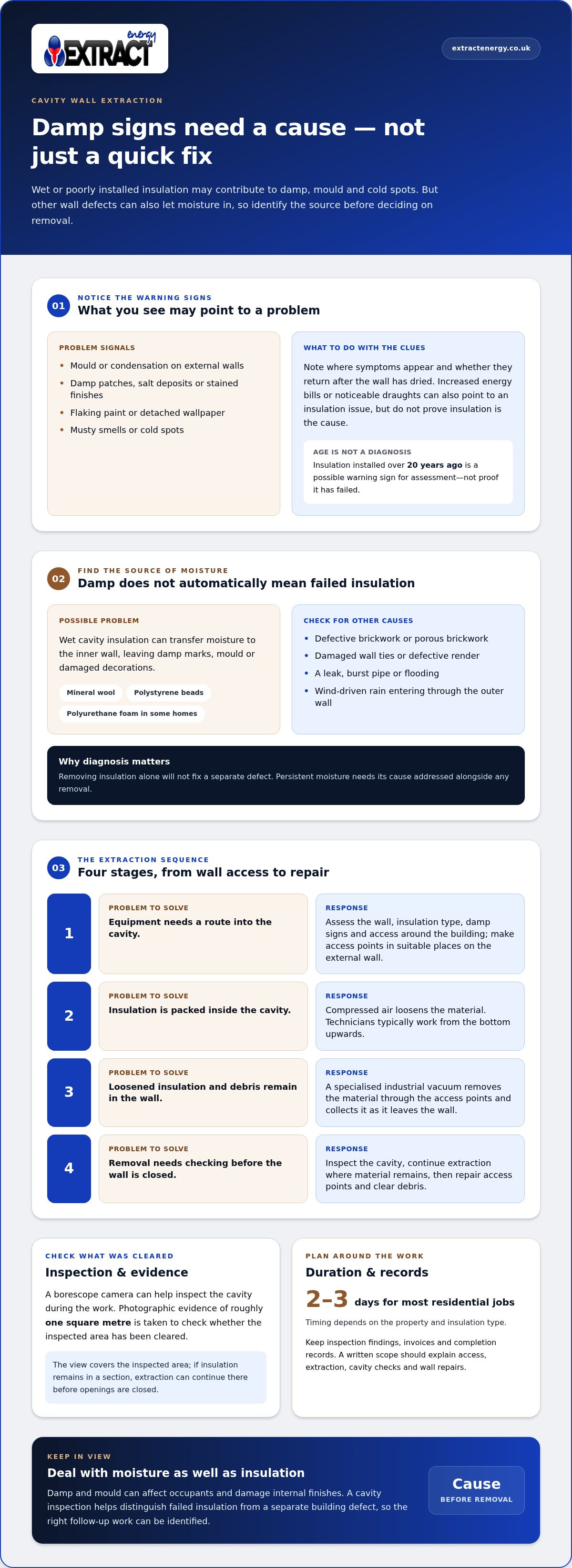
Look for mould or condensation on external walls, damp patches, stained or flaking paint, detached wallpaper, musty smells and cold spots. Increased energy bills or noticeable draughts can also point to an insulation problem, though they don’t prove it is the cause. Insulation installed over 20 years ago is a possible warning sign for assessment, not a diagnosis. Note where each symptom appears and whether it returns after the wall has dried.
Damp and Mould from Wet Insulation
Wet cavity wall insulation can transfer moisture across the cavity and affect the inner wall surface. It may leave damp marks, salt deposits, mould or damaged decorations. Mineral wool, polystyrene beads and, in some homes, polyurethane foam are used as cavity insulation; the material and its condition affect what is found during inspection. Persistent moisture also needs a cause, such as water entering through the outer wall, addressed alongside removal. In rented homes, damp and mould caused by failed insulation can be hazards under The Homes (Fitness for Human Habitation) Act 2018.
Reasons for Cavity Wall Extraction
Extraction may be needed when insulation has become wet, was poorly installed or is associated with defective wall ties, porous brickwork, defective render, flooding, a burst pipe or wind-driven rain. These problems can let water reach or cross the cavity. Cavity wall extraction removes the material through access points in the external wall, using equipment to loosen and collect it. Homes built between 1920 and 2005 may be suitable for cavity wall insulation, but age alone cannot establish whether insulation is sound or whether removal is needed. A cavity inspection helps distinguish failed insulation from a separate building defect.
Approval and Property Impacts
There is no single answer that applies across England, Scotland, Wales and Northern Ireland: building control requirements depend on the nation and the work involved. Tell your insurer about planned remedial work and keep inspection findings, invoices and completion records. These documents give an insurer, surveyor or buyer a clear account of the work, but don’t determine how a policy or valuation will treat it. Check any existing insulation warranty. A Cavity Insulation Guarantee Agency guarantee may cover remediation costs when covered insulation causes problems. Grants for removal are rarely available, so don’t assume an installation scheme will pay for extraction.
Compressed-air and vacuum extraction process
Cavity wall extraction starts with an assessment, followed by compressed air to loosen the insulation and a specialist vacuum to remove it. The sequence matters: access, extraction, cavity checks and repairs all affect the finished wall.
A qualified energy surveyor can inspect the property before work is planned. The survey considers the wall construction, insulation type, signs of damp and access around the building. These findings help determine where equipment can reach the cavity and whether visible defects need attention first. The quote should describe the work area, extraction method and how access holes will be finished. The material inside the cavity also affects the work involved.
During extraction, technicians work through access points in the external wall. They typically progress from the bottom upwards, using compressed air to loosen insulation and an industrial vacuum to remove it with debris. The airflow needs to dislodge the fill without avoidable damage to the cavity or masonry. Vacuum collection contains the material as it leaves the wall.
- Access points are made in suitable places across the external wall.
- Compressed air loosens the insulation inside the cavity.
- A specialised vacuum removes the loosened material and debris.
- The team checks the cavity and repairs the access points.
A borescope camera can help inspect the cavity during the work. Photographic evidence of roughly one square metre is taken to check whether the cavity has been cleared. This provides a view of the inspected area, rather than relying only on what emerges through the vacuum. If insulation remains in a section, extraction can continue there before the openings are closed.
Choose a company registered to carry out removal, with a professional, certified installer and inspection by a qualified energy surveyor. Ask for a written scope explaining access, extraction, cavity checks and wall repairs. These details make it easier to understand what the quote covers and how the team plans to handle particular walls, such as a narrow side passage or an area with damaged brickwork.
Once extraction is complete, holes and gaps are restored, and debris is cleared from the work area. A clear record of the inspection and completed work helps show what was removed and where checks were made. You can also read about insulation removal as you consider the steps involved.
What are the health risks behind old wall insulation?
The main concern is often moisture, not the age of the insulation alone. Damp and mould linked to failed cavity insulation can affect occupants, damage internal finishes and indicate a building defect that needs attention.
In rental homes, damp and mould caused by failed cavity wall insulation can be hazards that render a property unfit under The Homes (Fitness for Human Habitation) Act 2018. That makes it important to record where mould appears, whether it returns and which walls feel cold or damp. A patch behind a wardrobe, for example, may point to a local problem that deserves inspection, not just cleaning.
Damp, mould and health
Wet insulation can transfer moisture across the cavity and leave damp patches on internal walls. Persistent damp can encourage mould growth on wallpaper, paint, furnishings and other surfaces. Visible mould may be only part of the problem: moisture can also remain behind a finish or inside the wall. Cleaning the surface without finding the source can leave the underlying issue unchanged.
Look for patterns. Condensation on an external wall, a musty smell and mould returning in the same corner suggest ongoing moisture. A burst pipe, defective render or wind-driven rain can also introduce water. These causes need to be distinguished because removing insulation won’t repair a leak or defective masonry. A specialist inspection can assess the cavity and surrounding wall before work begins.
Structural concerns and removal disruption
Moisture can stain or loosen decorations, detach wallpaper and leave salt deposits on brickwork. Defective wall ties, porous brickwork and damaged render are other concerns, as each can contribute to water entering the cavity. The right response depends on the inspection: extraction addresses failed insulation, while the source of water ingress needs its own repair.
Removal also causes some practical disruption. The team drills access holes in external brickwork, works outside the home and uses equipment to loosen and vacuum out insulation. Expect operational noise, equipment outside and debris to be collected. Internal rooms may also need to be accessible if the survey identifies a particular inspection point or affected wall. Once extraction is complete, the openings are restored and the surrounding work area cleared.
Before work starts, take dated photographs of existing cracks, damaged pointing and damp marks. Keep records of the survey, areas inspected and work carried out. These help distinguish pre-existing defects from changes noticed after removal. If there is mould, record its location before cleaning. This gives the inspection a clear starting point and helps track whether the same area becomes damp again.
Extraction duration and team size
Most residential cavity wall insulation extractions in the UK take 2-3 days. Property size and insulation type affect the time. A three-bedroom semi-detached house may take up to 2 working days, with a two-fitter team. A three-bedroom detached property typically takes around two days.
Those figures describe different homes and working estimates, not a fixed schedule for every address. A survey helps establish the wall area, access and insulation material before work is planned. Bead, mineral wool and foam can behave differently during removal. The amount of material, how evenly it fills the cavity and whether it has become damp can also affect the sequence of work.
Setup is part of the job. The team needs to position extraction equipment, arrange access to the external walls and protect the work area. A customer account describes work at a larger-than-average three-bedroom semi taking about 3.5 hours once the team was set up. That example is not a whole-job duration: preparation and finishing still take time.
Practical features around the house can also affect progress. A narrow side passage, limited access to a wall or changes in the masonry may mean equipment and access points need to be repositioned. If inspection finds material remaining in a section, the team may need to continue working there before sealing the openings. Defective brickwork or other structural concerns also need to be considered in the work plan.
Before work starts, make sure the working area is accessible and discuss obstacles, such as items stored against an external wall. During extraction, the team works through access points, loosens the insulation and collects it with a vacuum. The cavity is then checked and the wall openings repaired. This explains why the overall duration includes more than the time spent extracting material.
- Property size: a larger wall area means more sections to access and clear.
- Insulation material: its condition and distribution affect extraction and inspection.
- Access: obstructions can change how equipment is positioned.
- Finishing: cavity checks, repairs and debris clearance follow extraction.
Use the survey findings to compare the proposed schedule with the work described. For example, a quote for a three-bedroom semi should cover extraction, cavity checks and repairs, rather than treating vacuuming as the only task. A clear sequence explains what the team will do if the cavity contains stubborn or damp insulation.
Cavity wall extraction method
The method follows a clear sequence: create access, loosen the fill, remove it, inspect the cavity and repair the wall. The aim is to clear insulation through external openings while limiting disturbance to the brickwork. Access points and working direction depend on the wall and the material inside.
Some methods start by removing bricks at the bottom of the wall to form pockets. Others use small holes drilled into the external brickwork. These openings give equipment access to the cavity. The choice depends on the building’s construction and the extraction method. A careful survey helps tailor the work to each wall rather than treating every elevation the same way.
Once access is ready, pressurised air loosens insulation from the cavity surfaces. The airflow helps break up compacted or settled material so a specialist industrial vacuum can collect it. Operators work across the wall, often moving from the bottom upwards. This lets them tackle the cavity in sections and track which areas have been cleared. Mineral wool, polystyrene beads and polyurethane foam can behave differently during removal, so the material affects how the work is carried out.
Inspection is part of the method, not just a final glance. A borescope camera can view the cavity through an opening. Photographic evidence of roughly one square metre is taken to check whether the cavity has been cleared. The image records the inspected area, and the team can continue extraction where material remains. A clear view can also help identify visible obstructions or defects that may affect the next step.
After removal, access holes and gaps are restored, brickwork is repointed where needed, and debris is cleared from the work area. The finish matters: poorly closed openings can leave visible marks or allow water into the wall. Restoration follows extraction, with the inspected sections and repaired openings recorded for the homeowner. This provides a practical account of what was checked and completed.
For homeowners, the key distinction is between removing material and checking how far extraction has reached. A description of the work should cover access points, the extraction sequence, cavity inspection and repairs. It should also explain how the team handles any section where insulation remains or the wall reveals damage. These details make the method clearer than a simple promise to remove cavity wall insulation.
If the method suits your home’s needs, arrange cavity wall insulation removal as the next step.
Extract Energy: Cavity wall insulation removal
Extract Energy carries out cavity wall insulation removal for homes with failed or damp insulation. The company uses its own Extract Vac system, which it designed and makes, to remove material from the cavity. The service is for homeowners who have identified a possible insulation problem and need the wall assessed and cleared.
After removal, some homes may be suitable for replacement insulation. Extract Energy also installs ThermaBead bonded bead insulation. The right next step depends on the cavity’s condition and the cause of any moisture: replacement insulation won’t fix a separate wall defect. An assessment helps determine whether extraction alone or replacement is appropriate.
To discuss cavity wall insulation removal for your home, contact Extract Energy or visit extractenergy.co.uk.
Take the next step with a clear plan
Before arranging cavity wall extraction, note where damp appears, when it started and whether it returns after drying. Record any previous insulation work or wall repairs too. These details provide a useful starting point for discussing your property and the work it may need.
Extract Energy removes cavity wall insulation and can discuss whether ThermaBead bonded bead insulation is suitable after assessing the cavity. The company also provides loft insulation, so you can raise related insulation needs in the same conversation. The sequence matters: address the source of moisture before deciding what insulation should follow.
Take the time to explain what you have seen and what you want resolved. A straightforward conversation can help you understand the next practical step for your home. Contact Extract Energy about extraction to discuss your property.
Frequently Asked Questions
How Much Does It Cost?
The price depends on the property and is provided after a quote request. Wall area, insulation material, access around the house and the condition of the brickwork all affect the work involved. For example, restricted access to a side wall can change where equipment is positioned. When requesting a quote, describe damp areas and previous repairs so the assessment can focus on the relevant parts of the property.
Can I re-insulate after extraction?
Yes, a cavity can be re-insulated after extraction if it is suitable and the moisture problem has been addressed. The next step is to assess the cleared cavity and identify whether the original cause, such as defective render or water ingress, remains. For homes in Hampshire, Surrey, Wiltshire or West Sussex, this assessment helps distinguish a cavity ready for new insulation from one needing further repairs first.
How Is It Removed?
Specialist equipment loosens insulation inside the cavity and collects it for removal. The material matters: beads, mineral wool and foam can respond differently when disturbed. Extraction teams work through planned access points and monitor the cavity as they go. Ask how the team records which wall sections have been inspected, especially if damp has affected only one elevation.
How Long Does It Take?
Most residential jobs take 2-3 days, depending on the property size and insulation type. Access can also affect the practical sequence, such as where a narrow passage limits equipment placement. Before work begins, arrange clear access to the external walls and move items stored beside them. This helps the team reach the planned work areas without avoidable interruptions, though the job still includes inspection and making good afterwards.
Is extraction always necessary if there’s a problem?
No. Damp or mould alone doesn’t prove that insulation needs to be removed. A leaking pipe, damaged render or porous brickwork can cause similar symptoms, and extraction alone won’t repair those defects. The decision should follow an inspection of the wall and cavity. For example, if moisture enters through a local masonry defect, repairing that source may be central to resolving the problem.
How much does cavity wall insulation removal cost in the UK?
The cost depends on the home and the work required, and a price is provided after a quote request. A useful quote should make clear which walls are included, how access affects the work and whether cavity checks and repairs are covered. If you live in Hampshire, Surrey, Wiltshire or West Sussex, include the property type and any access difficulties when describing the job.
What are the signs of failed or damp cavity wall insulation?
Possible signs include damp patches, mould or condensation on external walls, flaking paint, detached wallpaper, musty smells and cold spots. Higher energy bills or draughts can also prompt an inspection, but don’t identify the cause on their own. Note which rooms and walls are affected and whether symptoms worsen after rain. This pattern can help distinguish moisture entering through the wall from other household causes.
How is cavity wall insulation removed, step by step?
The sequence is planned around the wall and the material inside it. Broadly, cavity wall extraction follows these stages:
- Inspect the property and plan suitable access points.
- Open the external wall at those points.
- Loosen and vacuum out the insulation.
- Inspect the cavity for remaining material.
- Restore openings and clear the work area.
A borescope can help inspect sections that aren’t visible from outside.
